

Osuna blends Baroque architecture, noble history, and Andalusian culture with an easy-going charm. Whether you come for its palaces, historic university, or Game of Thrones connections, Osuna offers a rewarding detour from Seville and a chance to experience authentic Andalusia.
Why Visit Osuna, Spain: Andalusia’s Best-Preserved Historic Centre
Set among the rolling hills of Andalusia and only an hour from Seville, Osuna has long been admired for its history and elegance. Declared a Historic-Artistic Site in 1967, it is considered the best-preserved historic centre in Andalusia. Walking its streets, you’ll pass Baroque façades, Renaissance mansions, and the university that still operates today.
Quieter than Seville or Córdoba, Osuna holds an authenticity that makes a deep impression. From its noble past and rich architecture to its ties with Game of Thrones, the town is a destination that rewards slow exploration.

Views of the town of Osuna from the Collegiate Church of Our Lady of the Assumption. Photo: Wendy Nordvik-Carr©

View of the Monastery of La Encarnación from Collegiate Church of Our Lady of the Assumption. Photo: Wendy Nordvik-Carr©
Baroque Beauty and Noble Heritage
Osuna’s rise occurred during Spain’s Golden Age, when its noble families invested considerable wealth in churches, palaces, and civic buildings. Their ambition gave the town its unmistakable Baroque character.
What is Baroque design?
Baroque architecture, art and design first flourished in Italy and spread across Europe in the 1600s, leaving behind buildings that impressed through their scale and drama. In Osuna, you can see this spirit in the soaring facades, richly carved doorways, and churches where painted ceilings lift your gaze skyward. Light was used as part of the architecture, domes and windows positioned to create theatrical effects, while sculpture added movement and emotion. Angels, saints, and heroic figures often appear in vivid poses, designed not just to decorate but to stir belief and wonder. Walking Osuna’s streets, you feel how this style wasn’t simply about beauty, but about power and persuasion, a visual reminder of the wealth of the town’s nobility.

The ornate Cilla del Cabildo. Photo: Wendy Nordvik-Carr©
Is Calle San Pedro the most beautiful street in Europe?
Strolling Calle San Pedro is to walk through the heart of Osuna’s noble legacy. I found the street to be a fascinating living museum, lined with palaces and stately homes that reflect centuries of architectural evolution. Wrought-iron balconies, elaborate portals, and carved coats of arms add layers of detail.
There are many references to Calle San Pedro street in Osuna being referred to as one of the most beautiful streets in Europe as dedicated by UNESCO in 2023; however, I could not find any official record to date. This street is also said to have the highest concentration of Baroque Palaces in the world.

Calle San Pedro Street in Osuna. Photo: Wendy Nordvik-Carr©

Calle San Pedro Street in Osuna. Photo: Wendy Nordvik-Carr©
Notable landmarks include:
- Palace of the Marquises of La Gomera – A grand Baroque mansion with an imposing facade is the most exceptional in Osuna. This 18th-century building, designed by Juan Antonio Blanco, was constructed between 1764 and 1765.
- Cilla del Cabildo – An 18th-century storehouse with a striking design.
- Palacio de los Cepeda – Now the courthouse, showcasing classical elegance.

Palace of the Marquises of La Gomera on Calle San Pedro. Photo: Wendy Nordvik-Carr©

More palaces along Calle San Pedro. Photo: Wendy Nordvik-Carr©
The Collegiate Church of Our Lady of the Assumption
High on the hill above Osuna rises the Colegiata de Santa María de la Asunción, the town’s most important monument. Built in the 16th century, this Renaissance church is both a place of worship and a showcase of artistic wealth. Inside, golden altarpieces catch the light, carved choir stalls line the nave, and a collection of Flemish paintings speaks to the Dukes of Osuna’s far-reaching connections.
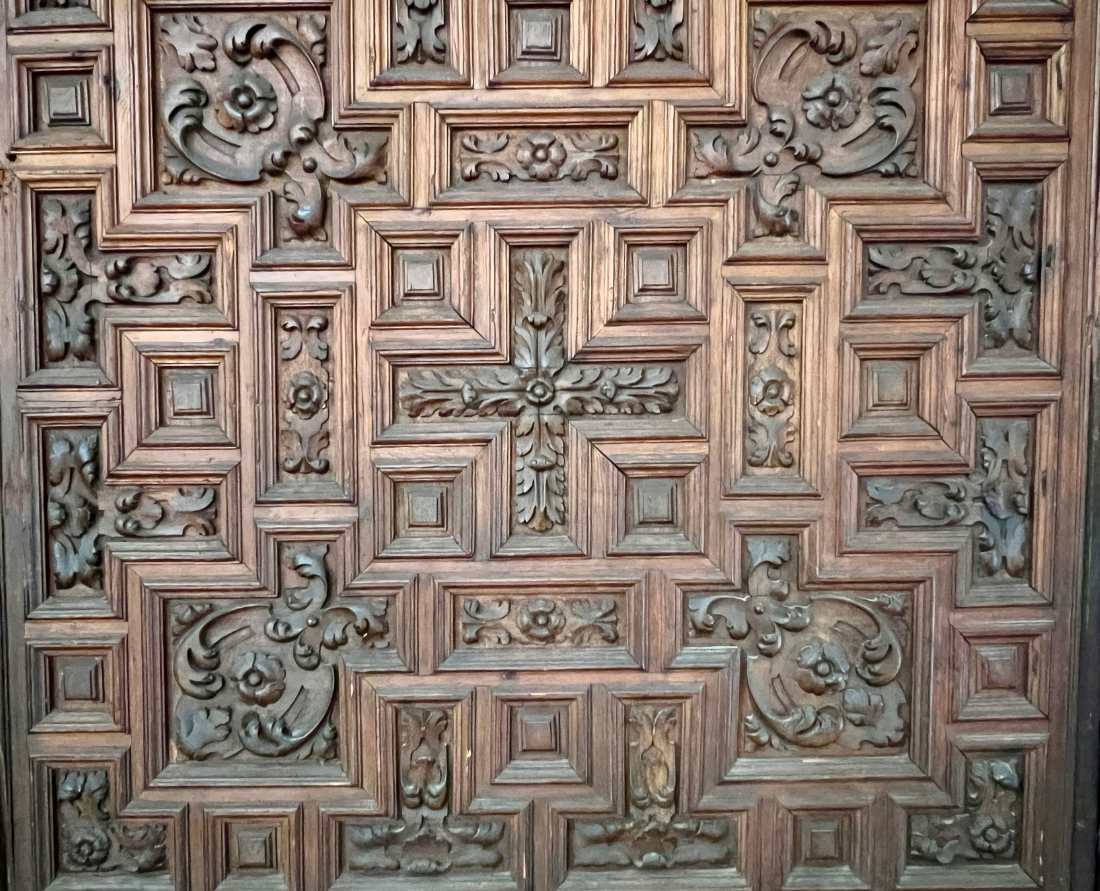
Carved door entering the Collegiate Church of Our Lady of the Assumption. Photo: Wendy Nordvik-Carr©

Courtyard near the entrance of the Collegiate Church of Our Lady of the Assumption. Photo: Wendy Nordvik-Carr©
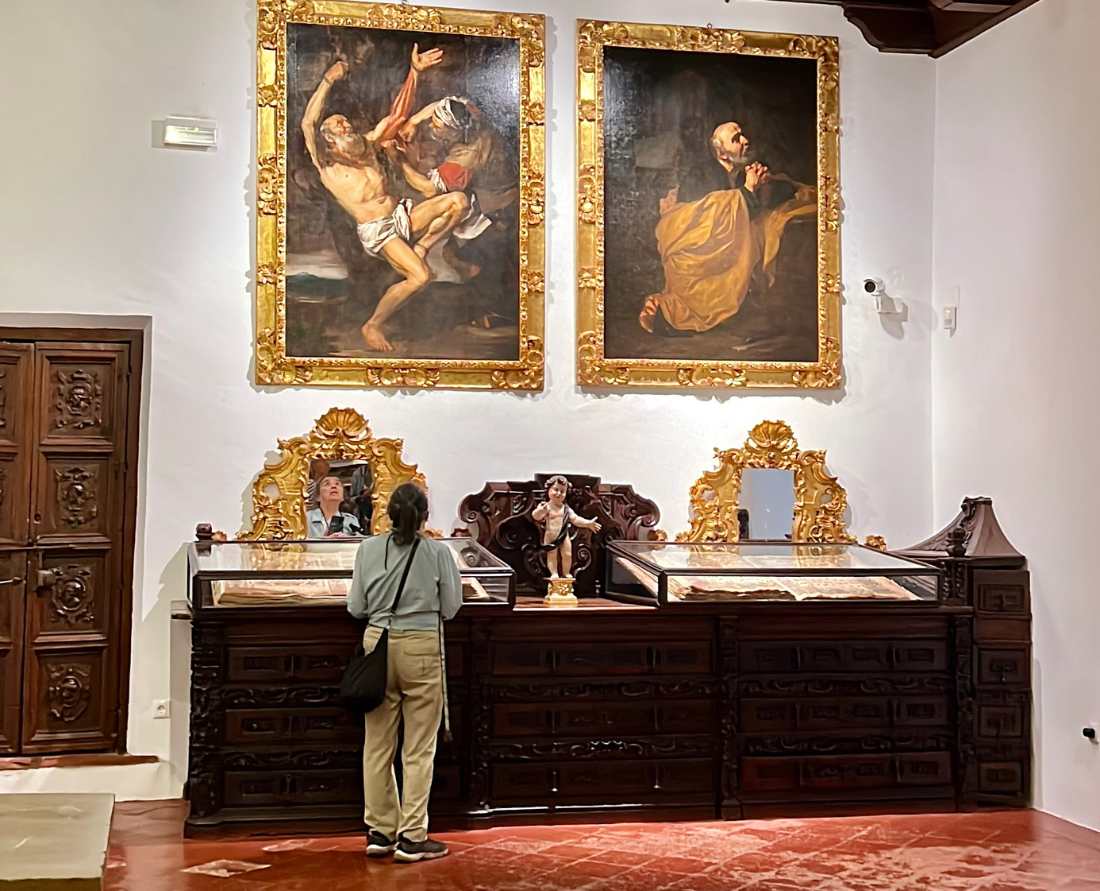
Some of the Flemish paintings in the Collegiate Church of Our Lady of the Assumption. Photo: Wendy Nordvik-Carr©

Inside the Collegiate Church of Our Lady of the Assumption. Photo: Wendy Nordvik-Carr©

Collegiate Church of Our Lady of the Assumption. Photo: Wendy Nordvik-Carr©

Collegiate Church of Our Lady of the Assumption. Photo: Wendy Nordvik-Carr©
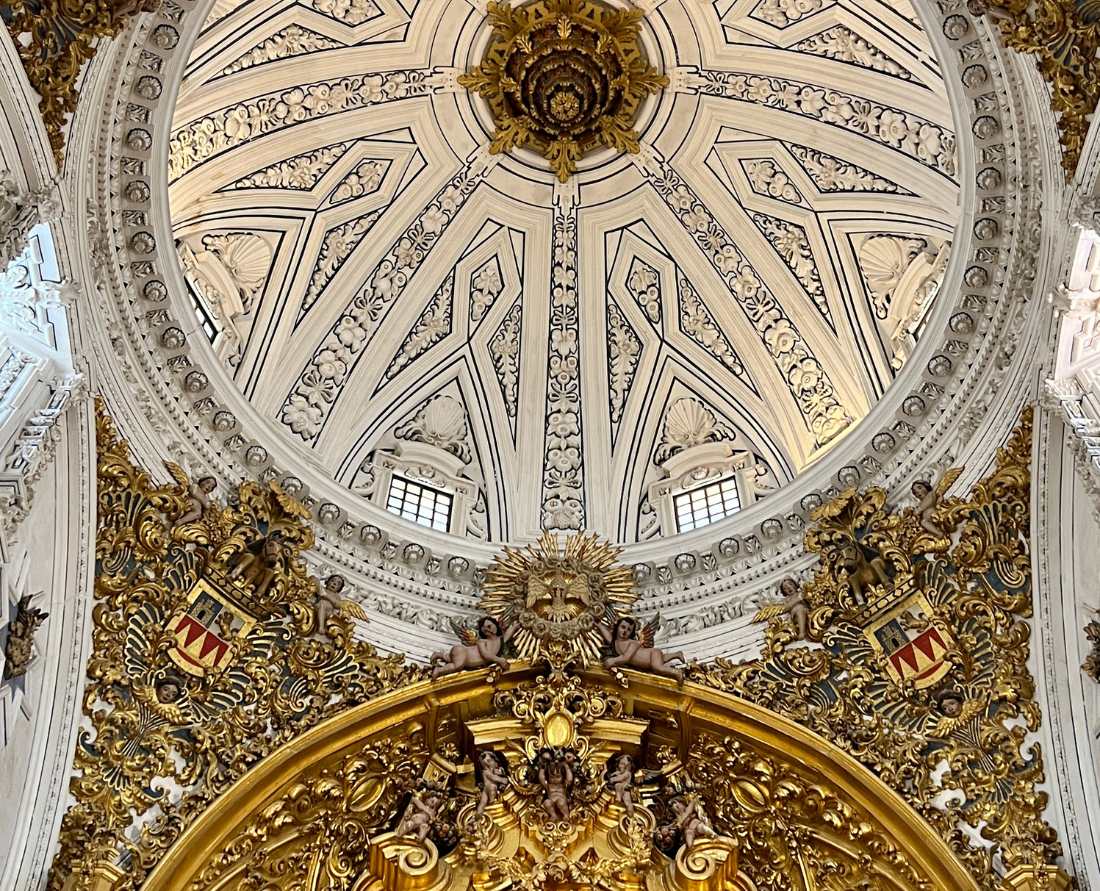
Collegiate Church of Our Lady of the Assumption. Photo: Wendy Nordvik-Carr©

Collegiate Church of Our Lady of the Assumption. Photo: Wendy Nordvik-Carr©
The Pantheon of the Dukes of Osuna
Adjoining the church is the Pantheon of the Dukes of Osuna, a funerary chapel of extraordinary beauty. Here, generations of the mighty dynasty lie in marble tombs decorated with sculpted effigies and heraldic symbols. More than a burial site, the Pantheon is considered one of Spain’s finest examples of Renaissance funerary art, a place where artistry and dynastic pride converge.

Pantheon of the Dukes of Osuna at the Collegiate Church of Our Lady of the Assumption. Photo: Wendy Nordvik-Carr©
The Bear of Osuna – A Town’s Emblem
Look closely as you wander Osuna and you’ll notice the bear appearing again and again, carved into stone façades, stamped on coats of arms, and etched into noble crests. Adopted by the Dukes of Osuna, the animal came to symbolize strength, endurance, and the authority of one of Spain’s most powerful dynasties. Centuries later, the bear still watches over the town, a proud reminder of Osuna’s identity and its noble past.

The Bears of Osuna. Photo: Wendy Nordvik-Carr©
The Petra of Andalusia – El Coto de las Canteras
On the edge of town, El Coto de las Canteras takes you by surprise. From the outside, it appears to be a quarry cut into the hillside, but step inside and the scale is breathtaking. Vast sandstone walls rise almost 25 metres high, carved and hollowed over centuries to supply stone for Osuna’s palaces and churches.
Today, the cavernous interior has found a second life as a cultural venue. Known locally as the Petra of Andalusia, its natural acoustics and constant temperature make it an extraordinary stage for concerts, theatre, and even weddings. Standing in its shadowy halls, it’s easy to imagine both the toil of the quarrymen who worked here and the artistry of the masons who turned its stone into Osuna’s finest buildings.
The Roman Necropolis
A short walk away lies Osuna’s Roman necropolis, a haunting reminder of the town’s ancient past when it was known as Urso. Dozens of rock-cut tombs, cisterns, and passageways reveal the rituals of a civilization that flourished here almost two thousand years ago. Many of the burial chambers are simple, carved directly into the limestone, while others are more elaborate, suggesting the wealth and status of those interred.
Exploring the site offers a striking contrast to the grandeur of Osuna’s Baroque streets. Here, among the weathered tombs and silent chambers, the town’s Roman roots still echo beneath Andalusia’s sun.
Game of Thrones Connection
In 2014, Osuna became part of modern pop culture when its bullring featured as the fighting pits of Meereen in Game of Thrones. Fans still visit the arena, which links the town’s medieval heritage to a global audience.
Other highlights of things to see in Osuna
- University of Osuna – Founded in 1548, it is still a functioning university with a Renaissance cloister.
- Monastery of La Encarnación – A convent dating back to the 16th century, with Mudéjar ceilings and quiet courtyards.
- Plaza Mayor – The lively town square, perfect for tapas or coffee.
Be sure to check out other nearby areas Carmona, Cordoba, and the exclusive 5-star resort of Grand Hotel Son Net Mallorca: A Luxury Retreat in the Tramuntana Mountains

Arco de la Pastora. 18th Century. Built during the reign of Carlos, this neoclassical arc belonged to the old Main Door of Ecija, and is the only piece that has survived in Osuna. Photo: Wendy Nordvik-Carr©

Monastery of La Encarnación. Photo: Wendy Nordvik-Carr©
Where to Eat
I stopped at Restaurante Doña Guadalupe, a cozy spot serving Andalusian favourites such as salmorejo, cazuela de fideos, and seasonal tapas. For dessert, don’t miss the mantecados de Osuna, the town’s signature almond pastries. Other excellent choices include Casa Curro and Mesón del Duque, both known for traditional dishes.

Food served at the Restaurante Doña Guadalupe. Photo: Wendy Nordvik-Carr©

El restaurante doña Guadalupe de Osuna. Photo: Wendy Nordvik-Carr©

Inside the Restaurante Doña Guadalupe. Look at the beautiful display of traje de luces (‘suit of lights’) the traditional clothing that Spanish bullfighters wear. Photo: Wendy Nordvik-Carr©
Where to Stay
• Hotel Palacio Marqués de la Gomera – A boutique hotel inside a Baroque palace on Calle San Pedro.
• Hospedería del Monasterio – A former monastery offering simple charm and history.
Travel Tips
Getting There: Osuna is an hour’s drive from Seville and has a direct train connection.
When to Visit: Spring and autumn are ideal for sightseeing. Summer is hot, but mornings and evenings bring life back to the streets.
Subscribe to be alerted to the next article as soon as it’s published. We pride ourselves in writing informative articles with interesting tips.
Search for accommodation anywhere by using Booking.Com, book a sightseeing tour using Viator or a flight with Expedia and any commissions earned will help keep this website running.
About the Author:

Wendy Nordvik-Carr is a highly regarded travel writer who produces quality, well-researched articles with stunning photography and video.
She seeks out authentic experiences showcasing the people, culture and history that make each destination unique. Her focus is on solo, couple and multigenerational travel through cruising, air and road trip adventures.
Wendy is the editor & writer for LifesIncredibleJourney.com, an award-winning travel site that encourages exploration of destinations near & far.
She is a TMAC Director, Chair, National Governance Committee and Chair of TMAC's BC & Yukon Chapter, as well as a member of SATW, IFWTWA and NATJA.


Have you been here? Want to go or have other tips or comments. We'd love to hear from you.