

This Sicily travel guide by award-winning writer Maureen Littlejohn explores the island’s extraordinary journey through history, culture and flavour; from 4th-century bikini-clad athletes to ancient Greek temples, Modica chocolate and Marsala wine.
My eye was first caught by the girls in bikinis. They were not on a beach.
These gals were captured in mosaics, cavorting across the floor of Sicily’s Villa Romana del Casale. Built in the 4th century AD and located in southern Sicily near Piazza Armerina, Villa Romana del Casale features room after room of mosaic masterpieces. I could see why UNESCO considers the collection among the finest Roman mosaics still in their original location.
Frozen in time, these skimpily clad athletes were flexing their muscles.
“This was probably the villa’s gymnasium,” explained Filippa Posta, our guide, who confided she had enough background on the site to write a book.

Bikini Girls of Sicily – Surprisingly, the female athletes depicted in a mosaic floor of Villa Romana del Casale wear similar attire to modern day beach volleyball competitors. Photo: Maureen Littlejohn©
Bikini Mosaics at Villa Romana del Casale
Villa Romana del Casale was a luxurious property. Set on nine hectares, the main building complex comprises 48 sprawling rooms. Filippa pointed out the thermal baths, pool, lounging areas, dining halls and courtyard colonnades.
Then there were more than 3,500 square metres of mosaic flooring. “They are well preserved because they lay beneath a mudslide that buried the complex in the 12th century,” Filippa noted.
In another room, Hercules vanquished monsters and giants.
“As you can see, this is the mythical hero undertaking his 12 labours.”
Filippa waved her arms over the fantastical mosaic and urged us to look more closely. I could see that the Cretan Bull and Lernaean Hydra didn’t stand a chance against the brawny he-man.
Most striking was a 60-metre corridor mosaic called the Great Hunt. It illustrated the capture and transport of wild animals destined for the Roman Empire. Lions, tigers, elephants and rhinos were headed to a rather unpleasant life — and probably death — in Roman arenas.
“The mosaic suggests the villa’s owner may have traded in exotic animals. A home like this must have belonged to someone very wealthy. Perhaps a senator, or someone close to the emperor,” Filippa surmised.

The Great Hunt mosaic at Villa Romana del Casale depicts the capture and transport of wild African animals that were taken to arenas for entertainment. Photo: Maureen Littlejohn©
Exploring Ancient Syracuse Sicily
Sicily is a treasure trove of antiquities. In southeastern Sicily, we dug into its earlier Greek history at Neapolis Archaeological Park in Syracuse.
Overlooking the city, the park is home to the Greek Theatre. Carved into the limestone hillside of Temenite Hill, the ancient theatre became one of the great architectural achievements of Greek Syracuse.

Syracuse Greek Theatre – The famous Greek Theatre in Syracuse still hosts classical performances today. Photo: Maureen Littlejohn©
The Greeks staged classical theatre here, but in later years the Romans modified the site for their own spectacles.
The park also had a Roman Amphitheatre, built in the 3rd century AD; I got a chill looking at the lower holding trench. I could almost hear the crowd screaming for blood, demanding the wild beasts and gladiators penned below be loosed into the arena.

Syracuse Roman Amphitheatre Trenches – The Roman Amphitheatre in Syracuse where bloodthirsty cries could be heard before gladiators did battle. Photo: Maureen Littlejohn©
Ear of Dionysius
Another fascinating structure in the park was the Ear of Dionysius. The ear-shaped limestone cave was part of the Latomia del Paradiso quarry where thousands of Athenian soldiers were imprisoned during the Peloponnesian War in 413 BC.
According to legend, the cave’s powerful acoustics were used by the tyrant Dionysius I of Syracuse. It is said he eavesdropped from the top to hear the secrets of his captured political dissidents.

The Ear of Dionysius, the cave where tyrant Dionysius was said to listen to his captives’ secret plans. Photo: Maureen Littlejohn©
Greek Temples and the Cathedral of Syracuse
In the historic heart of Syracuse, on the island of Ortigia, stood the remains of the Temple of Apollo.
Little of what is considered Sicily’s oldest surviving Doric stone temple remained standing. Dating to the 6th century BC, it represents an important transition from wooden buildings to monumental stone construction. But as I could see from the remaining column stubs, even stones have difficulty weathering the elements.
A 10-minute walk from the temple, the Cathedral of Syracuse towered above Piazza del Duomo.
It was originally the 5th-century BC Temple of Athena, but was layered over many times with other religions.
The temple became a Byzantine Christian church, then an Arab mosque. The Normans restored it to a church. Finally, it was rebuilt as a cathedral in the Sicilian Baroque style after the 1693 earthquake.
Remarkably, the ancient Doric columns are still embedded in the cathedral’s outer and interior walls.
Valley of the Temples in Agrigento
Perhaps my favourite archaeological spot was the Valley of the Temples, just outside Agrigento on Sicily’s southern coast. The UNESCO World Heritage Site is not actually a valley, but rather a high plateau overlooking the Mediterranean Sea.
“This park preserves the ruins of Akragas, one of the most prominent cities during the Greek reign,” our guide Lorenzo Capraro explained.
Lorenzo, born and raised in the region, led us to the Temple of Concordia. Standing in the blazing sun, we waited for an explanation and tried to find shelter beneath the dusty olive trees. “The ones with thick trunks can be up to 5,000 years old,” he told us. Even older was the Temple of Concordia. Built around 430 BC, it is one of the best-preserved Doric temples in the world.
“Why is it so well preserved? That’s likely due to being converted into a Christian basilica in the late 6th century AD. It was a big attraction for European aristocrats taking the Grand Tour from the 1600s to the 1800s. Farmers in the area had filled the space between the columns, like the cathedral in Syracuse. But later they removed the walls so visitors could admire the Greek beauty,” Lorenzo explained.
Outside the temple lay a broken statue of Icarus. Was it from Greek or Roman times?
Lorenzo solved the mystery. “That was the work of Polish artist Igor Mitoraj. It’s the only one left of 17 he did for an exhibition here in 2011.”

Valley of the Temples Concordia. Evocative sculpture of Icarus by Igor Mitoraj in front of the Temple of Concordia. Photo: Maureen Littlejohn©
The site’s other temples are mostly ruins, including those dedicated to Juno and Hercules. The enormous Temple of Olympian Zeus was among the most ambitious Doric temples the ancient Greeks ever attempted; crumbling and never finished, it lies in ruins.
Nearby, a reconstruction project stopped me in my tracks.
“In 2024, archaeologists reassembled this 7.6-metre-high stone statue called a Telamon. It’s a giant male human figure. Originally there were 38 supporting the temple’s roof.” Lorenzo explained that the temple was built to celebrate the victory over the Carthaginians at the Battle of Himera.
“The Telamons might have represented Carthaginians forced to bow before the Greeks.”
All this dusty antiquity gazing made me hungry and thirsty.

Valley of the Temples dedicated to Juno. Photo: Maureen Littlejohn©
Tasting Modica Chocolate in Sicily
Apart from rib-sticking pasta and a myriad of eggplant dishes, two very Sicilian specialties stood out. One was a type of chocolate I’d never heard of — unusual for me. The other was a fortified wine.
The Baroque town of Modica is Sicily’s chocolate mecca.
Our group stopped at an outlet of the organic, fair-trade chocolate maker Sabadì. Chunks of the unusual treat were laid out in a showroom, along with many flavour-infused bars.
Before sampling, Sabadì associate Antonella Interrera gave us the background. “It’s a style unique to this area,” she explained. Unlike conventional chocolate, Modica chocolate is cold-pressed at 45 degrees Celsius (113 degrees Fahrenheit) so the sugar crystals don’t completely dissolve and no fats are added.
Nibbling on a small cube, I noticed the difference immediately. It was crunchy with sugar crystals. The chocolate flavour was intense, but it had none of the smooth silkiness that cream or fats provide and is generally associated with conventional chocolate.

Modica Chocolate Demo: Surveying the many Sabadi Modica chocolate products before sampling. Photo: Maureen Littlejohn©
Antonella explained that the method came from the Spaniards who inhabited Sicily for 500 years, beginning in the 1200s. “In the 16th century, when chocolate was introduced from South America, the Spaniards ground the cacao beans and mixed them with sugar to make a sweet chocolate drink. Some people think the style came from the Aztecs, but they never had sugar. It really was a Spanish tradition that stuck in Sicily.”
Pressing the mixture into bars, rather than using a loose mix for drinks, Sabadi is one of a handful of brands that make this unique chocolate.
In 2018, the European Union granted Cioccolato di Modica Protected Geographical Indication (PGI) status, recognizing the chocolate’s connection to its place of production.
Discovering Marsala Wine at Florio Winery
My other Sicilian discovery was Marsala wine.
I knew Marsala as a fortified wine, similar to sherry and Madeira, sometimes used in cooking.
But after visiting Florio Winery in the western coastal town of Marsala, I learned that grapes from local producers have a distinct salty character due to the location’s proximity to the Mediterranean Sea. Our guide Alessandra Messina told us the wine’s story as we swirled, sniffed and quaffed our way through a tasting flight.
“In 1773, a British man named John Woodhouse was stranded in Marsala during a storm and fell in love with the wine produced there. He decided to transport 60 barrels home to sell and fortified it with brandy so it would survive the voyage.”
The tale doesn’t end there.

Writer Maureen Littlejohn sizing up vintage barrels of Marsala wine in the Florio Winery cellars. Photo: Maureen Littlejohn©
The popular wine’s production was wrested from the English by an Italian.
“In 1833, Palermo-based Vincenzo Florio saw an opportunity. He bought property in Marsala, opened a winery, modernized production, and became the first Italian-owned producer to commercialize the wine.”
As I took one last sip, the sweet, caramelized warmth of the fortified drink made for a lingering finish to an unforgettable journey. From bikini-clad Romans to ancient stone temples, Sicily proved to be a vibrant crossroads of history, flavour, and incredible storytelling.
Planning a Trip to Sicily
How to Get to Sicily
Sicily has two principal international gateways, Palermo (PMO) in the west and Catania (CTA) in the east. Travellers will generally connect through a major European hub. You can also reach Sicily from mainland Italy by ferry.
How to Get Around Sicily
A rental car or organized tour gives travellers considerably more flexibility than relying entirely on public transportation.
Best Time to Visit Sicily
Spring and autumn are excellent for archaeological sightseeing because temperatures are generally more comfortable than during the hottest part of summer. That’s especially true for the Valley of the Temples, where shade is limited.
How Many Days Do You Need in Sicily?
If you would like to cover all of the places mentioned in the story, at least seven days, and preferably 10 to 14 days if travelling independently and wanting time to enjoy the destinations rather than simply moving between them.
Sicily Fast Facts
- Sicily has its own language. Sicilian, or sicilianu, is a Romance language distinct from standard Italian. Its vocabulary reflects the many cultures that have influenced the island over the centuries, including Greek, Arabic, Norman, French, Catalan and Spanish.
- Mainland Italy is only about 3.2 kilometres away. At its narrowest point, the Strait of Messina separating Sicily from Italy’s mainland is only about 3.2 kilometres (2 miles) wide.
- Sicily is one of Europe’s great volcanic regions. Mount Etna, dominating eastern Sicily, is Europe’s largest active volcano. Just north of Sicily, Stromboli is also active and has been erupting so regularly for centuries that it became known as the “Lighthouse of the Mediterranean.” The nearby Aeolian Islands are entirely volcanic in origin.
- Sicily is the largest island in the Mediterranean Sea. The island covers roughly 25,711 square kilometres and sits at a strategic crossroads between Europe and North Africa.
- Sicily has seven UNESCO World Heritage Sites. They include the Valley of the Temples, Villa Romana del Casale, Syracuse and the Rocky Necropolis of Pantalica, Mount Etna and the volcanic Aeolian Islands.
- Currency: Euro (€)
We pride ourselves on writing informative articles with interesting tips. If you found this article informative, please share it and leave any comments, questions, or suggestions below.
Discover more of our travel guides to Europe: 48 Hours in Avignon, France: A Provence Travel Guide, Amalfi Coast Travel Guide: La Dolce Vita from Sorrento to Ravello or How to Choose the Best River Cruise in Europe (Avoid These Common Mistakes)
Planning a trip? Search for accommodation using Booking.Com and Expedia or book a sightseeing tour using Viator. Any commissions earned will help keep this website running.
👉 Love discovering incredible places, fascinating history and unforgettable food?
Subscribe to Life’s Incredible Journey for inspiring travel stories, expert tips and extraordinary experiences from around the world — delivered straight to your inbox.
👉 Follow Life’s Incredible Journey for more travel inspiration, destination discoveries and stories you won’t want to miss.
Facebook | Instagram
About the Author:

Maureen Littlejohn
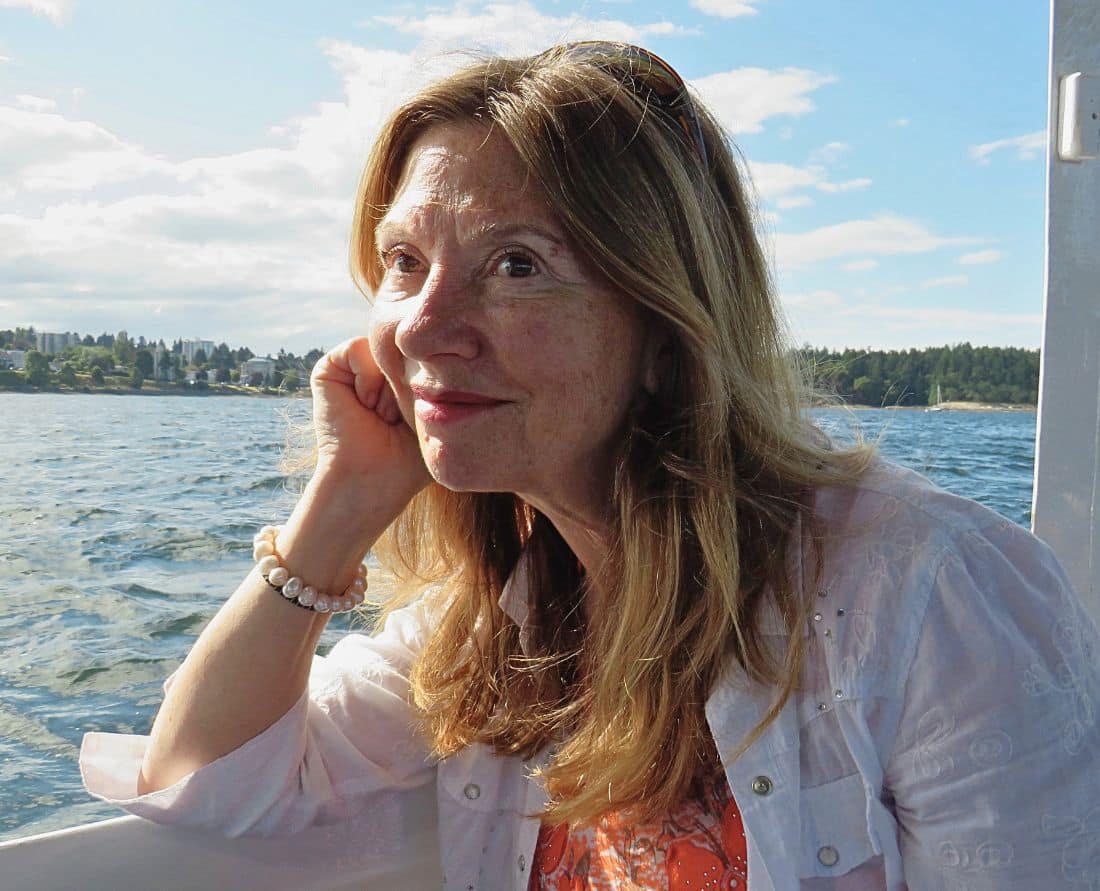
Maureen Littlejohn is a curious Sagittarius who loves to delve into the cultures, traditions and beauty of countries around the world. An award-winning travel journalist, she has worked in Canada, the United States, Eswatini (formerly Swaziland), Ghana, and Vietnam. Currently based in Toronto, she is a prolific freelance writer and her articles have appeared in outlets including CNN Global Travel, nationalgeographic.com, The Globe and Mail, Toronto Star, JourneyWoman.com, Panoram Italia, USA Today’s 10 Best, National Parks Traveler, and Hotel-Scoop.com.


Have you been here? Want to go or have other tips or comments. We'd love to hear from you.